Set & Setting, Part I: Same Mushrooms. Different World.
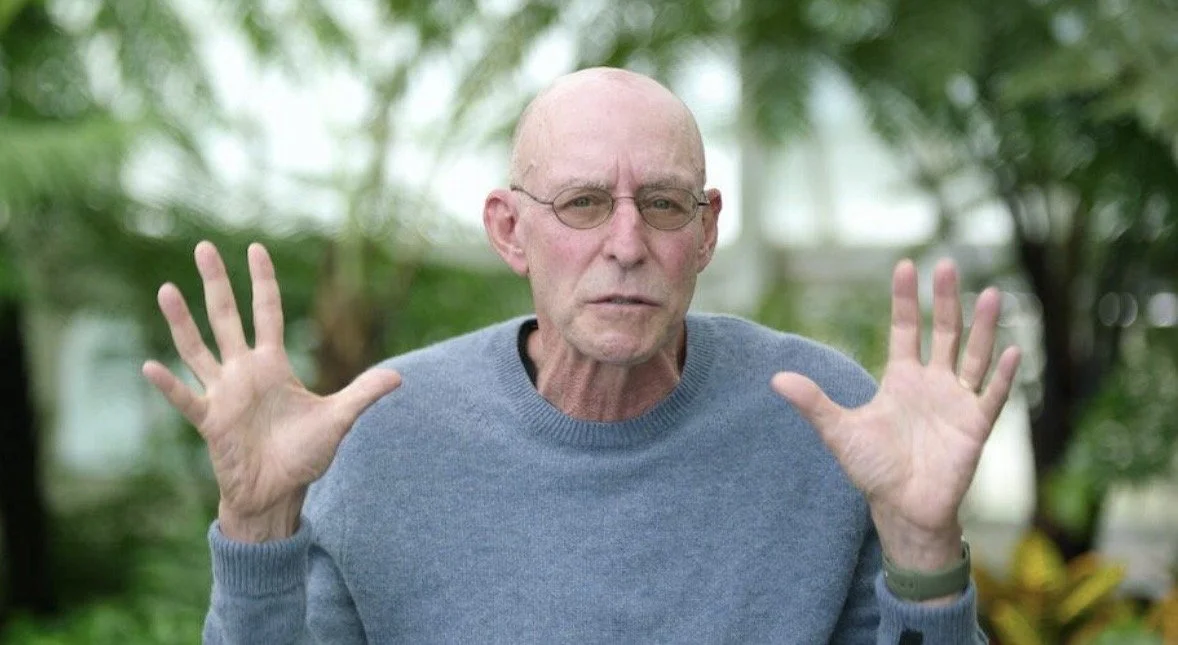
Michael Pollen’s experiences with psychedelics helped introduce millions of readers to the importance of “set and setting.”
When people talk about psychedelic safety, one subject tends to dominate the conversation:
Dosage.
How much did you take? How potent was it? How strong will the experience be?
Those questions matter.
But they’re only part of the story.
Before taking a psychedelic, there are two other things worth thinking about:
1. SET — What’s happening inside you?
Your:
Mood
Expectations
Fears
Intentions
Current mental state
2. SETTING — What’s happening around you?
Your:
Environment
People
Music
Privacy
Comfort
Sense of safety
Together, these are known as set and setting.
And they can have a profound influence on how a psychedelic experience unfolds.
Why We’re Writing About This
If we’re going to talk seriously about psychedelics, understanding the substance itself isn’t enough.
We also need to understand:
The person taking it
The environment they’re taking it in
How those things interact with the substance
That’s what this series is about.
And there may be no better introduction than a story Michael Pollan tells in How to Change Your Mind.
Because Pollan essentially took part in an accidental experiment.
Same person.
Same partner.
Same jar of mushrooms.
But two completely different environments.
And wildly different experiences.
Experience #1: Alone in the Countryside
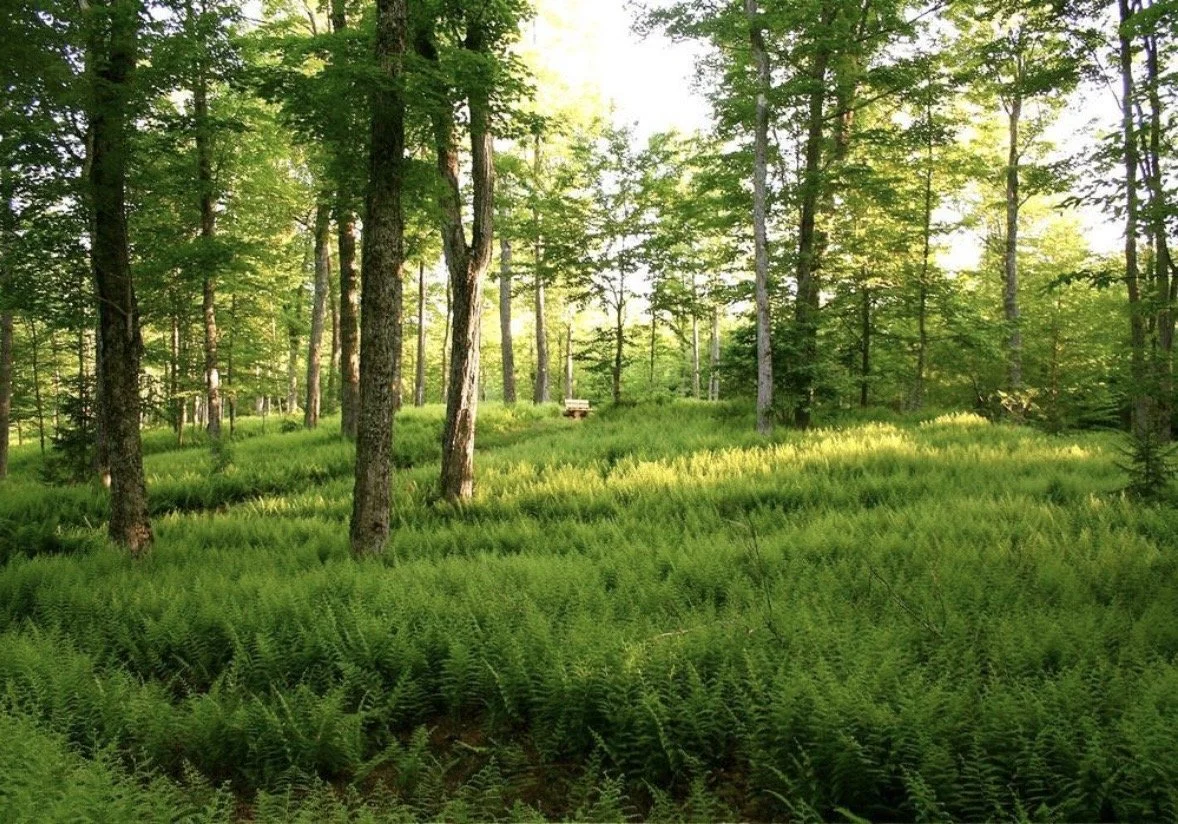
Pollen described the natural world becoming intensely vivid during his first mushroom experience - an experience shaped by the privacy and freedom of the countryside.
Pollan and his partner took mushrooms while they were alone in the country.
What followed was:
Fascination with the natural world
Intensely vivid vegetation
A desire to get away from artificial things
A feeling of freedom and uninhibited curiosity
And, eventually, Pollan wandering around naked marveling at nature
The ordinary world suddenly seemed extraordinary.
The greens of the woods became intensely vivid. Ferns seemed exceptionally soft and beautiful. Pollan developed a strong desire to get outside and away from things that felt artificial—particularly metal and plastic.
And because they were alone in the countryside, he could simply follow that feeling.
There were no strangers watching.
No crowd.
No expectation that he needed to behave normally.
Pollan later described the familiar world as:
“a wonderfully italicized version”
of itself.
Nothing had necessarily become unfamiliar.
It had become more intensely itself.
Experience #2: A Saturday in New York City
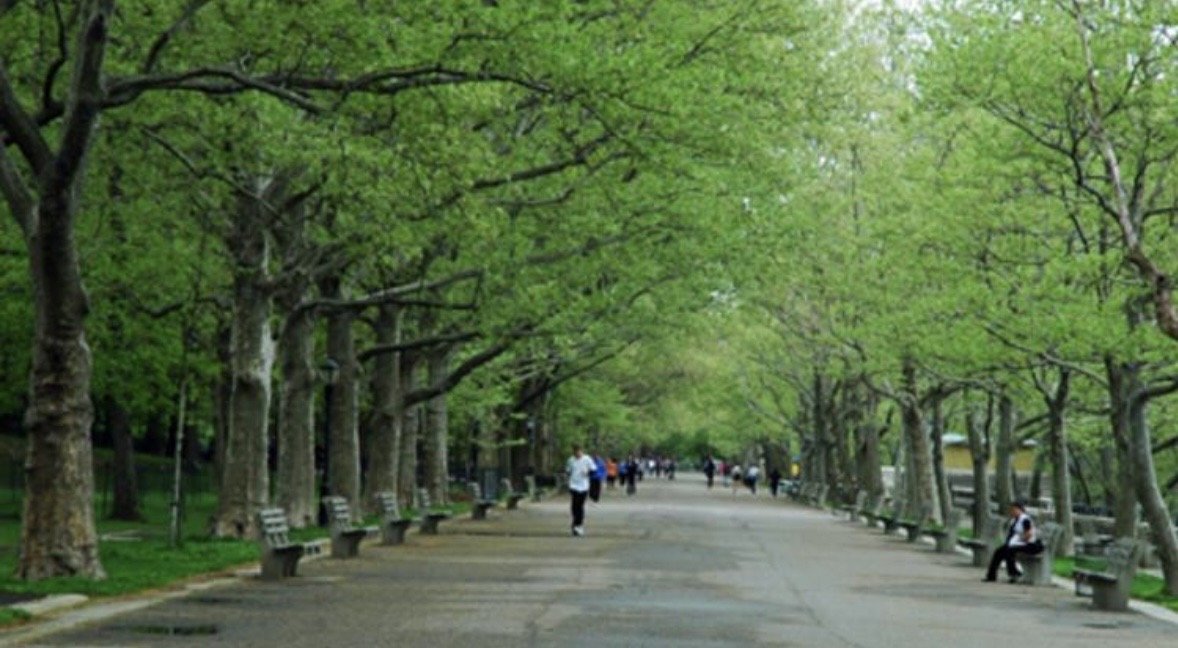
In Riverside Park, the experience changed. Surrounded by strangers, Pollen became self-conscience and preoccupied with whether people could tell he was high.
Pollan and his partner took mushrooms again—this time in Riverside Park in Manhattan.
What followed was:
Heightened awareness of the strangers around them
A growing sense of self-consciousness
Concern that other people might notice they were high
Difficulty simply losing himself in the experience
And, ultimately, a much less enjoyable experience than the one they’d had in the countryside
Instead of becoming absorbed in nature, Pollan became absorbed in how he might appear to everyone else.
One question started occupying his attention:
Can these people tell that I’m high?
The people around him weren’t necessarily doing anything to him.
Their presence alone had become part of the experience.
So… What Changed?
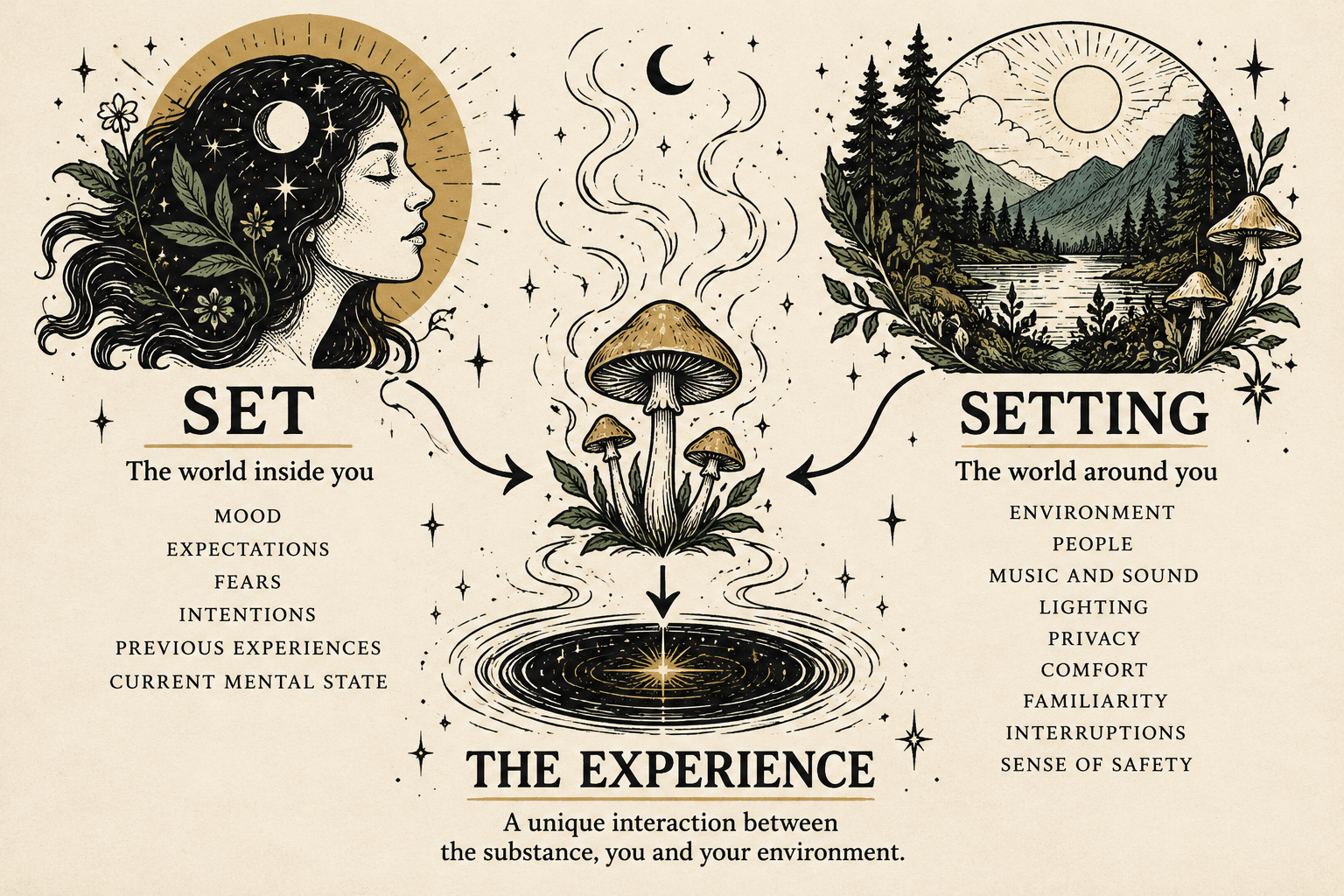
The set is the world you bring with you. The setting is the world around you. Together with the substance, they shape the experience that unfolds.
Not the person.
Not his partner.
Not even the jar of mushrooms.
The setting changed.
Years later, Pollan looked back at these two experiences and recognized in them:
“the critical influence of ‘set’ and ‘setting.’”
And that’s where this story becomes much bigger than Michael Pollan walking around naked in the woods.
Who Is Michael Pollan?
Michael Pollan isn’t a psychedelic influencer.
He’s an author and journalist who spent much of his career exploring food, plants, agriculture and the relationship between humans and the natural world.
In 2018, he published How to Change Your Mind, an investigation into:
The history of psychedelics
Their rise, fall and return to scientific research
The scientists studying them
What psychedelics might tell us about consciousness
And eventually, Pollan’s own experiences with psychedelics
The book became one of the works that helped introduce the modern psychedelic renaissance to a mainstream audience.
But these two mushroom experiences happened years before he wrote it.
A friend had given Pollan and his partner, Judith, a Mason jar filled with dried psilocybin mushrooms.
They tried them together on two occasions.
At the time, Pollan didn’t have the language to explain why the experiences had been so different.
Later, he did.
Set and setting.
1. SET — The World You Bring With You
Set is short for mindset.
It describes what’s happening inside you as you enter an experience.
That can include:
Your mood
Expectations
Fears
Intentions
Previous experiences
Current psychological state
Pollan describes psychedelics as tending to:
“magnify whatever’s already going on both inside and outside one’s head.”
That’s a useful way to think about set.
If someone enters an experience frightened or expecting something terrible to happen, those thoughts don’t necessarily disappear when the psychedelic takes effect.
They may become more important.
Likewise, feelings of curiosity, trust or safety can potentially influence how unusual sensations and emotions are interpreted.
You don’t enter a psychedelic experience as a blank slate.
You bring yourself with you.
2. SETTING — The World Around You
Setting is the external half of the equation.
And it’s much more than simply indoors vs. outdoors.
Setting can include:
The physical environment
The people around you
Music and sound
Lighting
Privacy
Familiarity
Interruptions
Whether you feel watched
Whether you feel safe
Pollan’s two experiences demonstrate this beautifully.
In the countryside:
An impulse to immerse himself in nature could simply unfold.
In Manhattan:
The presence of strangers introduced an entirely different concern:
What do they think of me?
The outside world had entered the inside experience.
Researchers Took This Seriously
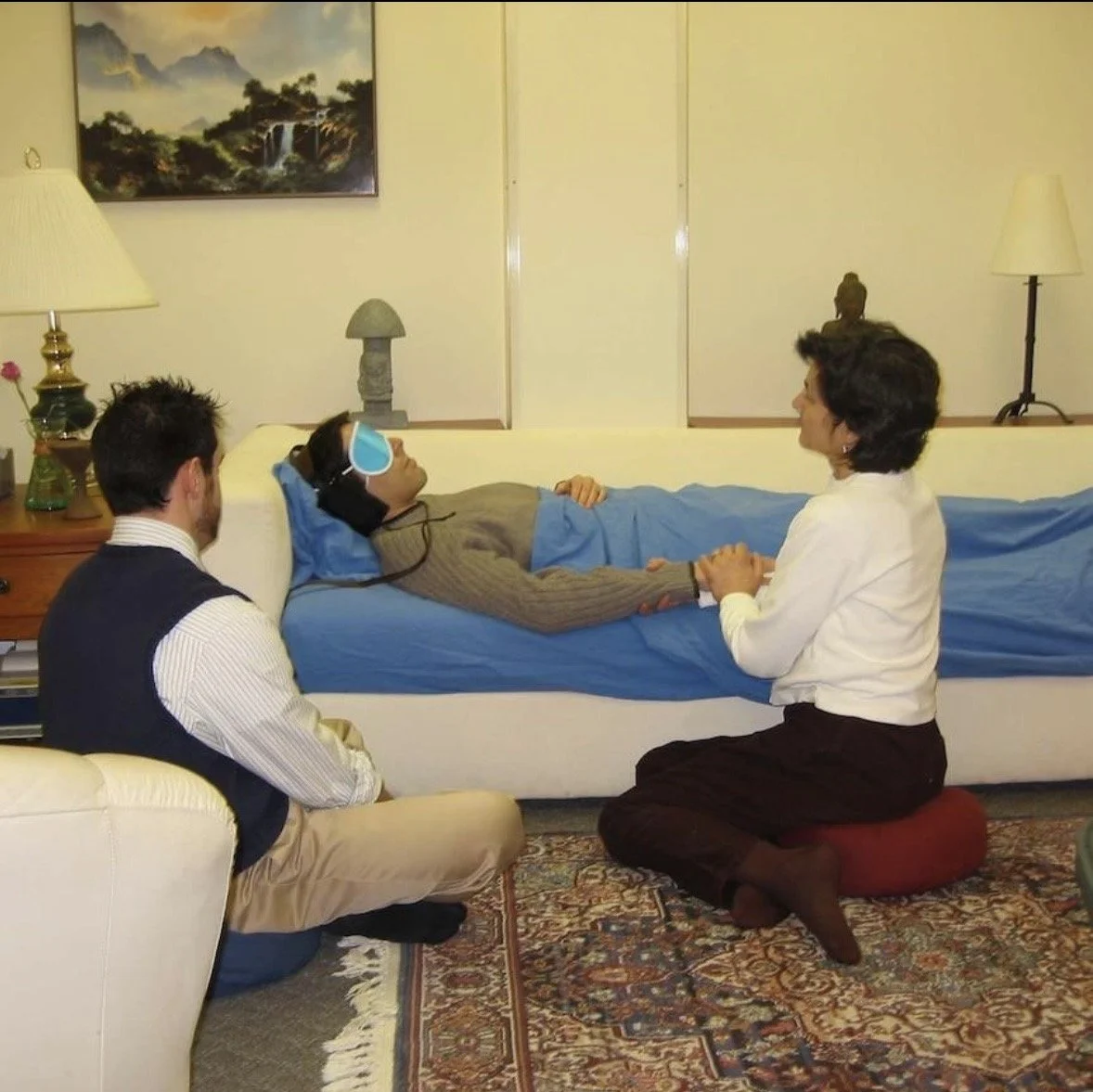
Modern psychedelic research takes setting seriously - using carefully designed environments, music, preparation and trained support as part of the research protocol.
When psychedelic research began returning to major universities, researchers didn’t simply give participants psilocybin in sterile examination rooms and see what happened.
They paid careful attention to the environment surrounding the experience.
In influential Johns Hopkins psilocybin research, participants were prepared beforehand and sessions were conducted in deliberately comfortable surroundings.
The research environment could include:
A comfortable, living-room-like space
A couch
Eyeshades
Headphones
Carefully selected music
Trained monitors remaining with the participant
That’s a remarkable amount of attention to seemingly peripheral details for a drug experiment.
The room wasn’t an afterthought.
It was part of the research protocol.
Hear It From the Researchers
Roland Griffiths helped lead the modern revival of psilocybin research at Johns Hopkins.
His team didn’t just study what psilocybin does.
They studied it within carefully constructed conditions designed around preparation, support and environment.
The point isn’t that a comfortable room guarantees a comfortable experience.
It doesn’t.
The important point is that researchers considered these variables significant enough to control for them.
Psychedelics Don’t Happen in a Vacuum
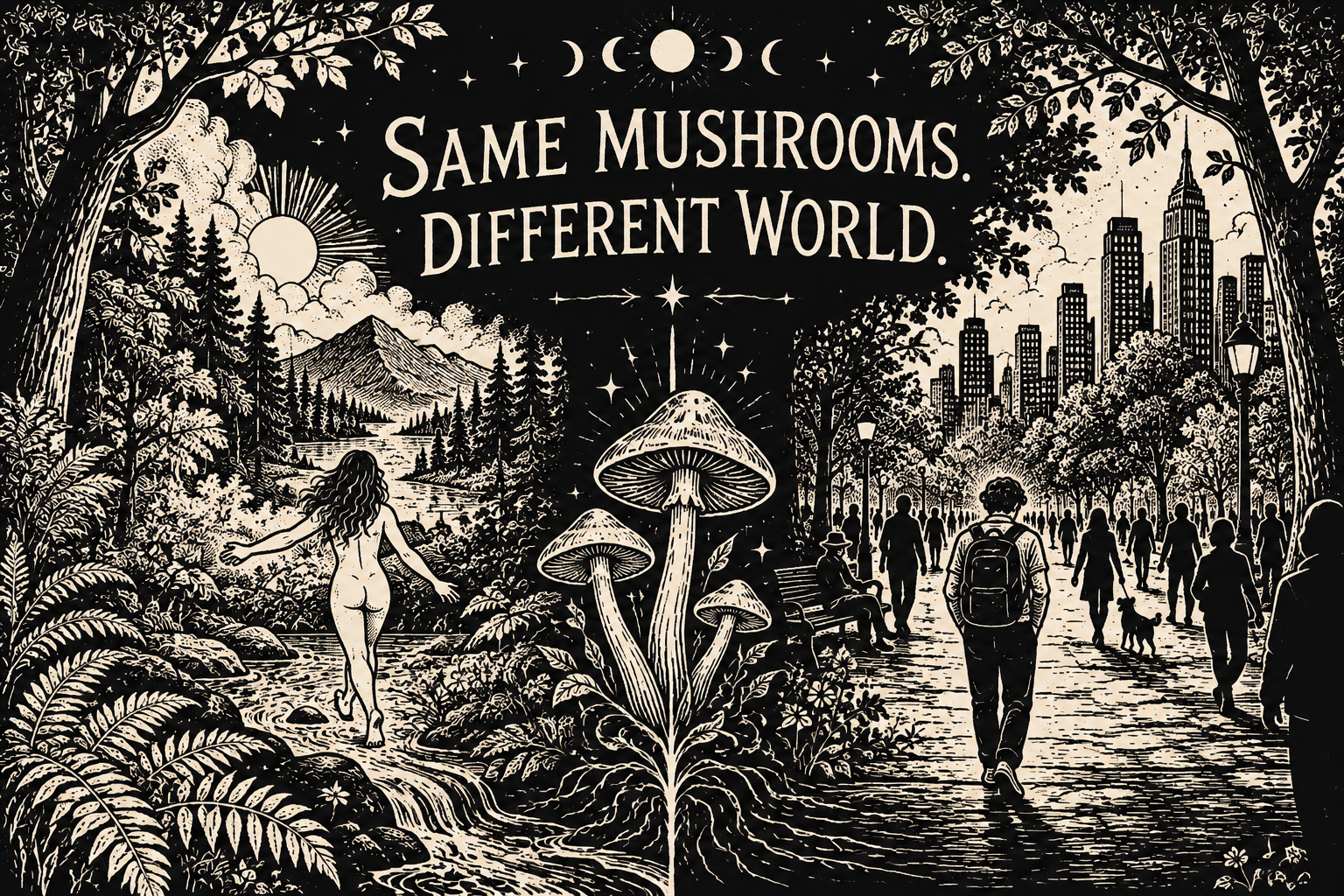
Same mushrooms. Same people. Different setting. Pollen’s two experiences offer a striking example of how profoundly the world around us can shape the world within.
We normally think about drugs something like this:
Drug → Effect
But psychedelic experiences appear to be more complicated.
A better way of thinking about them may be:
Drug + Person + Expectations + Environment + People = Experience
The pharmacology still matters enormously.
Without the drug, there is no psychedelic drug effect.
But the resulting experience isn’t created by the molecule in isolation.
It happens to someone.
Somewhere.
Around other people.
With expectations.
With memories.
With fears.
With beliefs about what’s about to happen.
And sometimes with strangers walking past you in Riverside Park while you’re desperately wondering whether they know you’re high.
But Set and Setting Aren’t Magic
There’s an important caveat.
Set and setting have become so deeply embedded in psychedelic culture that they’re sometimes discussed as though scientists have figured out exactly how every component works.
They haven’t.
Researchers broadly recognize the importance of context, and modern psychedelic trials routinely pay attention to it.
But scientists are still trying to determine:
Which elements matter most?
How much do they matter?
Do different people respond differently?
How much comes from expectation?
How much comes from the environment itself?
How do these variables interact with the drug?
That’s an important distinction.
“Researchers take this seriously” is not the same as “science has completely explained it.”
And that’s where things get especially interesting.
Same Mushrooms. Different World.
Go back to Pollan.
Same person.
Same partner.
Same jar of mushrooms.
In one environment, he became fascinated by the natural world and wandered through the countryside naked.
In another, he found himself in a Manhattan park worrying about whether strangers could tell he was high.
What changed?
The setting.
Pollan’s experiences don’t prove that environment determines what will happen during a psychedelic experience.
Nothing is that simple.
But they beautifully illustrate an idea psychedelic researchers have wrestled with for decades:
The substance is only one part of the experience.
There is also the person.
There is the place.
There are the people around them.
There are their expectations.
There is their state of mind.
There is whether they feel comfortable.
There is whether they feel safe.
And all of those things meet the molecule at once.
The psychedelic experience doesn’t happen inside a test tube.
It happens inside a person, somewhere in the world.
And that somewhere may matter more than we once realized.
Up Next: Part II — SET
If setting is the world around you, set is the world you bring with you.
In Part II, we’ll look at:
Expectations
Mood
Fear and anxiety
Intention
Suggestion
Why two people in the exact same environment can have completely different experiences
Because changing the room is only half the story.
Sources & Further Reading
Michael Pollan — How to Change Your Mind (2018)
Pollan’s account of his early mushroom experiences and discussion of set and setting.
Roland R. Griffiths et al. — Psychopharmacology (2006)
“Psilocybin Can Occasion Mystical-Type Experiences Having Substantial and Sustained Personal Meaning and Spiritual Significance.”
Johns Hopkins Center for Psychedelic and Consciousness Research
Research into psilocybin, psychedelic experiences and therapeutic applications.
This article is for educational purposes. Research conducted in screened, supervised clinical environments should not be assumed to carry the same risks or outcomes as unsupervised psychedelic use.