From Mushroom to Mind: How Psilocybin Becomes Psilocin
Meet psilocybin
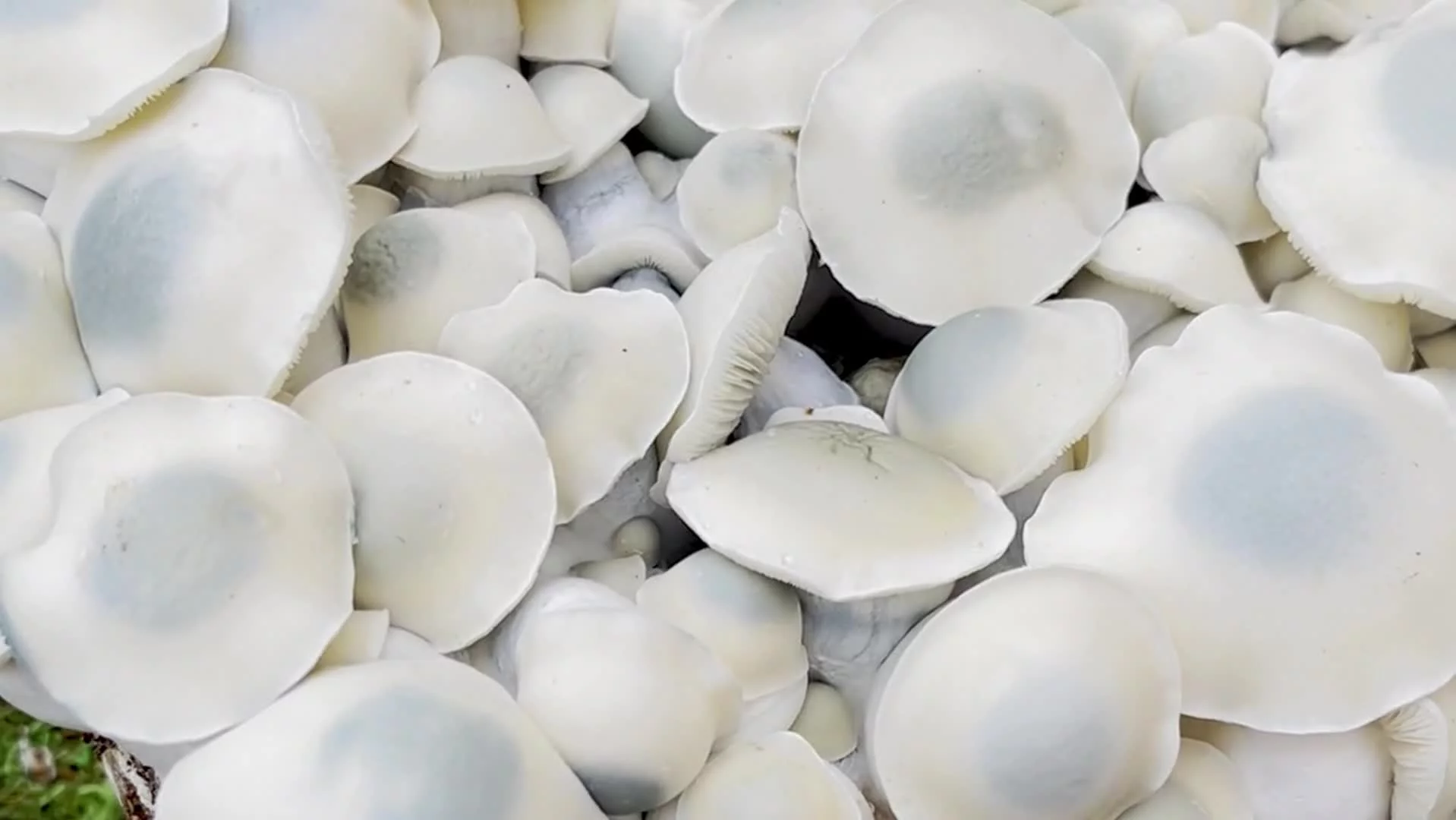
Psilocybin is a naturally occurring compound found in certain mushroom species. It acts as a prodrug: the body converts it into the active compound psilocin.
Some mushrooms also contain psilocin already. Our animation focuses on the conversion of psilocybin and what happens next.
A phosphate group comes off
After ingestion, enzymes remove psilocybin’s phosphate group in a process called dephosphorylation. The oxygen attached to the molecule’s ring remains, becoming part of a hydroxyl group, written as –OH. That produces psilocin.
In the video, an orange phosphate group separates from the black molecular model. It is a visual way to show a specific chemical change: the attachment changes while the molecular backbone stays intact.
The stomach cutaway simplifies the setting. Conversion is not confined to the stomach; intestinal enzymes and other tissues contribute. Think of this scene as a window into digestion and metabolism, rather than an exclusive address for the reaction.
From circulation to the brain
Following absorption, psilocin circulates in the blood and can cross the blood-brain barrier to reach brain tissue. This barrier is a selective interface between circulation and the brain. Our cutaway illustrates the passage at an enlarged, conceptual scale.
Where receptors enter the story
In the brain, psilocin acts at serotonin receptors, with 5-HT₂A receptors playing a central role in psychedelic effects.
Human research has linked blood psilocin concentrations and brain 5-HT₂A receptor occupancy with the intensity of the psychedelic experience. That connects the molecular journey to what a person actually feels.
What the glowing neurons represent
The animation’s colored pulses represent changes in neuronal signaling. The brain’s response is more complex than every neuron simply becoming more excited: psychedelic states involve changes in the patterns and dynamics of brain-network activity.
Those changes help produce shifts in perception, emotion, and the sense of self. The swirls and lights are artistic shorthand for that subjective experience, rather than a literal view of the brain.
Clay makes the journey easier to follow. The underlying chemistry gives it meaning.
One small molecular change. A very different experience.
The molecular models in this animation are illustrative. Ring geometry and some structural details are not exact; please refer to verified chemical structures for accuracy.